
Coaching Letter #236
On scaling as strategy

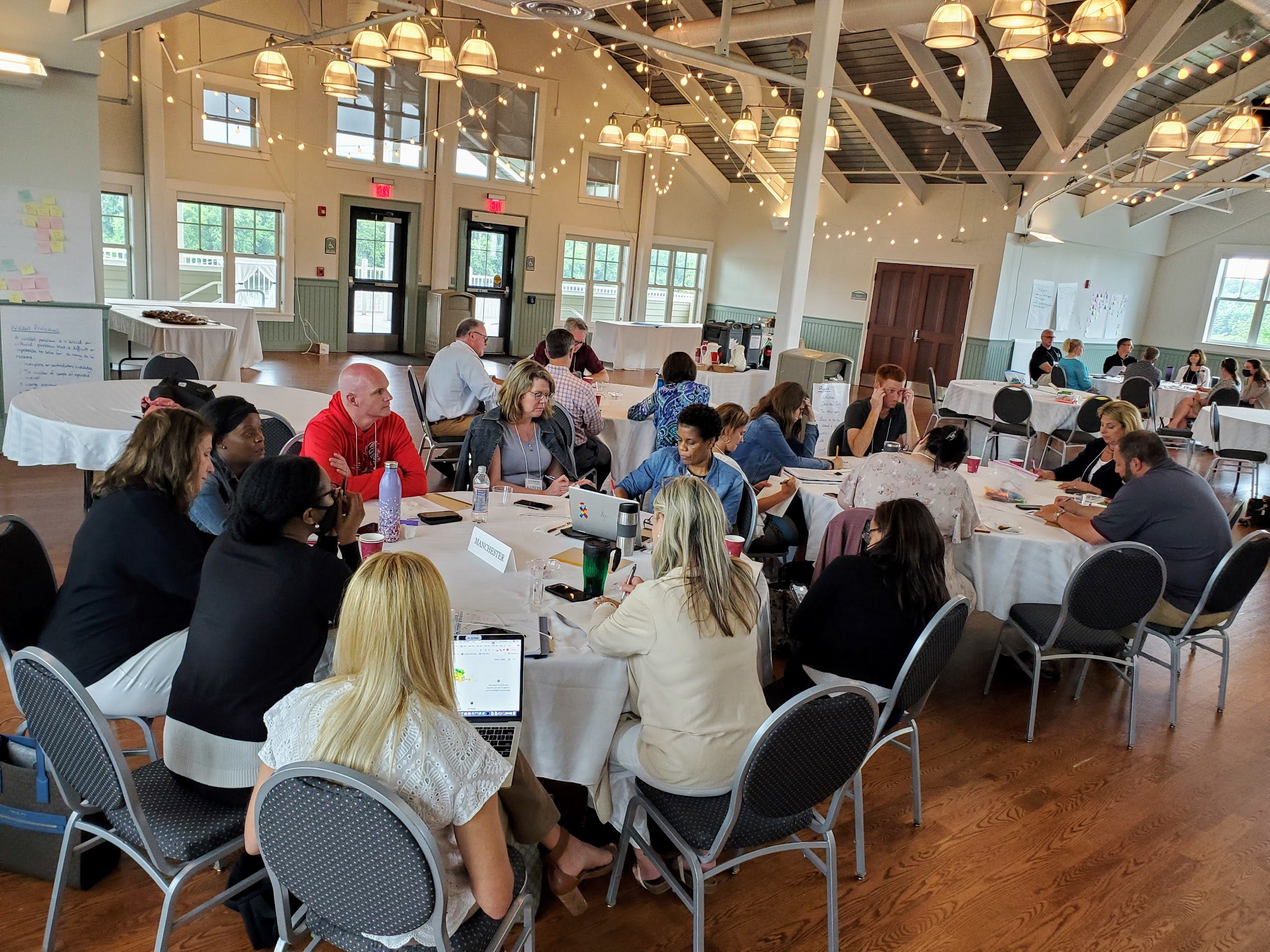
Hello, I hope you’re doing well. Almost all schools in the northeast are out for the summer, so you’ve got more time to read... That’s great! I hope you’ll have time for this book! We are busy getting ready for the Building Thinking Classrooms National Conference that we are hosting in New Haven in the next few days—hope to see many of you there!
I solicited feedback from a few hundred Coaching Letter subscribers recently, and one of the pieces of feedback is that they can be too long. I kinda knew that already—they function as a way for me to work through ideas, as much as anything, and sometimes that takes a while. As Blaise Pascal wrote, “If I had more time, I would have written a shorter letter.” (Although he wrote it in French.) But it did make me think that I should try to give you a TL;DR version at the top of each CL. I had ChatGPT do this bit:
TL;DR: Strategic plans may be necessary, but they are often not where the real strategy for instructional improvement lives. If we want ambitious instruction to spread, deepen, and become durable, we need to treat scaling itself as the strategy: build a shared understanding of good instruction, give teacher teams low-stakes routines for testing and improving practice, and create the conditions for success to propagate through language, relationships, student experience, and peer-to-peer ownership. The work our partners reported this spring is early evidence of exactly that: not compliance with a rollout, but practice taking root.
We have many projects running concurrently at PEL, but pretty much everything I do at the moment has to do with instructional improvement using three parallel levers:
Ensuring that everyone in the district has a shared understanding of good instruction;
Providing the resources and routines for teams of teachers to consistently and constantly test instructional practices related to the shared understanding of high quality instruction; and
Shifting power and relationships to create the conditions for instructional improvement to happen.
These things sound simple and straightforward, and at some level I guess they are, but that doesn’t mean that they aren’t also huge and difficult.
During the most recent meetings we had with the various schools, networks, and communities of practice that we work with, we had them run a success protocol based on those three levers (which you will also recognize as corresponding to Practice Architectures). So, in large part, this Coaching Letter is a tribute to the amazing educators we work with in Connecticut, Rhode Island and New York. You rock!
But the other thing that their successes demonstrate is that districts should probably think differently about the connection between scaling and strategy. The last five (!) Coaching Letters have been about scaling, summarized here (we have used this handout at multiple workshops lately, it’s super useful). Specifically, I have been prattling on for years about how useless most strategic plans are—with apologies to those of you who have strategic plans that serve you well (I do acknowledge that they exist, and we have helped create some of them). But on the whole, strategic plans treat the complex, contingent, adaptive, relational, judgment-laden, embodied, tacit-rich practice of teaching like it can be rolled out like an advertising campaign. I realized while I was talking to my BFF Ann last week that districts already know this, at some level, because they often have separate conversations about scaling, which is a tacit acknowledgement that their public-facing strategic plan does not address the highly nuanced, deeply contextual, and learning-dependent work of nurturing instructional improvement across a system.
I had a hard time not putting that last part in ALL CAPS.
What to do? I used to think that I could convince districts to ditch their template-driven strategic plans and think differently about strategy, but I realize now how stupidly naïve that was—those plans serve multiple purposes and multiple constituencies and are deeply embedded in the grammar of educational leadership. But I remember Michael Fullan’s very wise advice that you only need to get a C in compliance, so maybe I can use the successes that our partners have experienced to convince leaders to make sure that those plans fulfill their purpose, and then turn their attention to issues of scaling. The actual strategy—the enacted one, as opposed to the written one—could do a lot worse than focus on the three levers listed above—1. Ensuring that everyone in the district has a shared understanding of good instruction; 2. Providing the resources and routines for teams of teachers to consistently and constantly test instructional practices related to the shared understanding of high quality instruction; and 3. Shifting power and relationships to create the conditions for instructional improvement to happen—and then figuring out how to nurture change in the way that our fabulous partners have.
So here’s what they have to say—the educators who shared their successes with us—organized into categories and backed up by actual quotations recorded during the meetings—and, because it might be useful, I tie them back to what I’ve written before about Logic Alpha and Logic Phi and Practice Architectures:
The work that our partners are reporting is spreading through shared language, not compliance. One of the big ideas of Practice Architectures is that part of what makes a new practice possible is that the language and mental models exist to be able to talk about it. So here is someone’s report about how the language at their school has changed: “Yes, I’d say thinking tasks are a very regular part of our vocabulary now. Recipes, cognitive demands, keep-thinking questions versus stopping-thinking questions… these are things that we just say on a regular basis.” I think it’s easy to dismiss this as not a big deal, but from my point of view it is huge—how people talk reflects how they think, and how they think governs their instructional choices, and clearly this team is talking about how to keep students thinking.
The unit of scale is the team, not the individual teacher. I think this is super important. Most variations of teacher evaluation and coaching rely on changing instruction one teacher at a time, which, I have always thought, sounds pretty inefficient, don’t you think? I have all sorts of other thoughts about this, but those will have to wait. In the meantime, suffice it to say that teaching is a deeply social enterprise, and teachers are more heavily influenced by their peers than their supervisors, in the same way that kids develop accents like their friends and not like their parents. Here’s what someone has to say about that: “We’re not looking at teachers, we’re looking at teaching, and this way of working together is the vehicle for doing that… We’re getting better together through this process.” Here’s another one that I love: “The greatest gift that we’ve gotten out of this… is greater unity within our department… we’ve unified around a common problem, we have a common project, and we have this planning that we’ve been working on weekly.”
Change is more deeply rooted when power is co-active rather than coercive. When I wrote the Coaching Letter about Logic Alpha and Logic Phi, I made the point that some things must be tightly controlled—like food safety, budgets, and safety drills. This is the primary function of bureaucracy—to make sure that rules are created and enforced that keep people safe. Bureaucracy gets a bad name because it’s seen as rigid and inflexible, but that’s like complaining that a seatbelt is restrictive. But Logic Phi recognizes that enforcing rules and holding people accountable is not the best policy when it comes to practices that people have to learn their way into. Instead, this is what you want: “We all just decided together that we would work together and change our instruction… it did not feel like a directive. It wasn’t like a high-stakes thing. It was like, go do this and work together and see what happens.” This is the opposite of rollout, accountability, and walkthrough tools. And this one shows how lowering the stakes makes it easier to try new things: “Testing the recipes, that was a good one… the pressure was off of us to be the ones making the change. It was that we’re testing the recipe out, and if things go wrong, it’s not our failure. It’s like, let’s critique the recipe that we tried out.” Here, again, is the argument for recipes.
Success propagates success. Here’s an example of a deliberate scaling strategy of the “doubling Sarahs” variety, wherein people who are experiencing success share with a partner: “Each … grade level has kind of a buddy team that they are sharing their knowledge with… as we move into next year, working on how we will develop a PLC to facilitate this conversation within the grade levels.” That is exactly the kind of thing I mean by Logic Phi. The work spreads because people have enough understanding to explain it, and have experienced success such that they want to share it, and the structures and routines and leadership support make sharing possible.
Students are taking up the work. This is the part we should not miss! Scaling instructional improvement is not only a matter of more adults using the same language or more teachers trying the same routines. The whole point is that students experience more opportunity to learn. One teacher described the shift this way: “Everybody is always there for everybody now, because they’re so used to helping each other… it’s not your whiteboard, it’s our whiteboard. Yeah, it’s our learning.” Another teacher said, “Now it’s like the other kids are looking, they’re like, can we please go help that group, because they see that they’re struggling… kids will pop up and just start helping people. I don’t have to do anything.” I take this as evidence that the intellectual and social load of learning is moving from the teachers to the students, who are not only more engaged, they are demonstrating agency in the way that the classroom is run. The teacher is no longer the only source of information and support.
Leaders are creating the conditions for teachers to work together. I don’t have many quotations that I can attribute to leaders for sure, but I do have quotations from teachers describing the conditions they experienced, which may be even more important. One person said, “Teachers are willing to make changes when they feel really supported… the ongoing conferences and our ongoing twice-a-week weekly meetings really helped us to feel confident to try these practices out in the classroom.” Here is another example: “I create tasks for them because they have a lot of pacing guides… I’ll take their pacing guide and look at what tasks can be implemented into their curriculum.” This is called servant leadership. If we want teachers to enact cognitively demanding instruction, we cannot simply tell them to do it and then complain about them if they don’t. Someone has to reduce the burden so that the work becomes feasible. Someone has to help teachers connect the new practice to the curriculum.
This is a good place to mention that we consistently hear as the greatest bottleneck is the availability of high quality tasks. If you are currently working on that, I would really like to talk to you.
Here’s what I hope people take away from all this: If districts want instructional improvement to scale, they should be really clear on what good instruction looks like; create the resources and routines for teachers to test shared recipes in teams; keep the stakes low enough that people can learn honestly; pay attention to where success is emerging; ask those people to bring others in; and protect the conditions that allow the work to keep going. This is not proof of systemwide impact yet; these are early success reports. But they are exactly the kind of early evidence I would hope to see if instructional improvement is beginning to scale: shared language, changed routines, team ownership, greater psychological safety, more student thinking, lateral spread, and leaders learning to support the conditions for learning-based improvement.
And again, sounds easy, right? Except the dominant mental models say that change is scary, teachers—especially high school teachers!—are resistant to change, and at some point you are going to have to hold people accountable. But that is just not our experience. We have found people mildly skeptical but willing to give things a shot, increasingly enthusiastic when they experience success, and more than happy to share with others when asked. (For more on the psychology of change, there’s a chapter on that in the book that Rydell and I wrote a few years ago, Equitable School Improvement. Please check it out!) This, to me, is the center of the heart of the core of scaling as strategy: a team-based recipe-testing cycle that produces enough success to change beliefs as well as practice, and everything else flows from that.
If that sounds slower, messier, and less bureaucratically satisfying than working the action steps in a clean rollout plan, then I would tell you that it can definitely be messy and challenging, but surprisingly not as slow as you might think—and if you manage to pull off improvement that never happened under a typical improvement plan, how are you even going to judge speed? If you weren’t seeing movement before, then anything you do now is infinitely faster. Can I promise 100% success? No. But I am fairly amazed at what teams who only worked with us for a few months this year were able to pull off, with the help of leaders who took some pretty big leaps of faith with us. The written strategic plan may still have to exist. Fine. Just don’t assume that that’s where the strategy is. Sometimes you have to look for that elsewhere in the organization, and sometimes you have to create it.
And to circle back to where I started—honoring the folks we work with who have done so much great work in service of instructional improvement—I want to give a shout out to the original district teams who started the first NIC with us five years ago, in June 2021. (There’s a photo of that meeting at the Glastonbury Boathouse at the top of this post.) The problems of practice that you identified by the end of the second day—which boil down to: not all students have consistent access to challenging task—set us on a learning path that has resulted in a collection of activities, frameworks, and other resources that amount to a set of tools for instructional improvement that I am proud of and use every day. Thank you for the insight, expertise, and effort that you have put into this work! When I say that I love you, I am not joking or exaggerating.
If you want any further information about any of this work, or if I can help you with anything else, please don’t hesitate to reach out. Thanks so much. Best, Isobel