
Coaching Letter #222
On being grateful

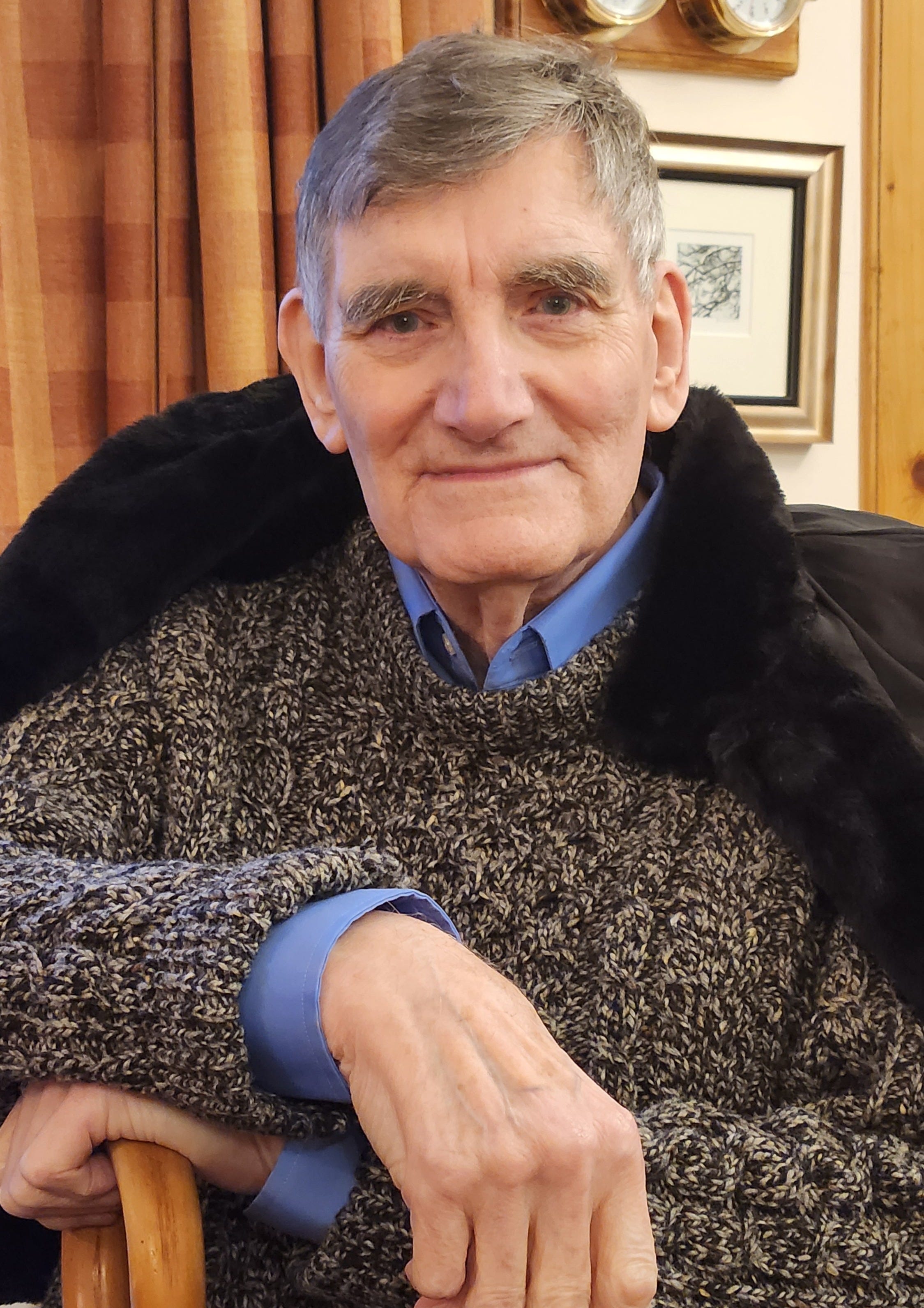
Friends, I hope this finds you well. If you are in the US, you already have your Thanksgiving plans made—may they go off without a hitch. I wrote the first Thanksgiving edition of the Coaching Letter just after my mother died—this was way before it was on Substack, and only a score or two of people were on the mailing list at that point, and the only place it survives is on the PEL website—Coaching Letter #14. Nevertheless, the list that I created of what I am grateful for is something that I have revisited every Thanksgiving, and I am always struck by how true the items on my list are—I will copy and paste it at the bottom of this letter, not because it’s the perfect list, but as an encouragement to create your own because, as I pointed out in that early CL, there is a science to gratitude, and it shows that it is a good thing to practice for your own good and the good of others.
This year is a bit different because my dad died recently, and so the first item on the list (“I am grateful that my dad is OK”, which was of course very much on my mind right after Mum died) needs revision. But it’s a simple edit: I am grateful that my dad was my dad. My dad was both very special and very ordinary, in the same way that all of our parents and our children are very special and very ordinary—it’s just the ratio that varies, depending on our relationship to them. While I was in Edinburgh a week or two ago, where my dad lived, my sister and I had lunch with one of my cousins, whom my dad liked very much. Stan said that he thought of people as either radiators or drains, and my dad was definitely a radiator. That struck me as a really good description of my dad—he brought warmth to his interactions with others, an energy that made them feel just a wee bit better, and that’s as good a tribute as you can give about anyone.
I also learned a lot from my dad. So in the spirit of the Coaching Letter, which is all about learning and getting better, here are what I think are the most important things I learned from my dad.
My dad left school at 16 and started work the next day—which was, he told me, Christmas Eve. He didn’t go back for formal qualifications until after I was born, at least 15 years later. None of my family up to my dad’s generation went on to higher education, so I always knew that a college education wasn’t required in order for a person to be smart, funny, and knowledgeable. My dad wasn’t particularly impressed by credentials, and that’s been a useful lesson—to have a more nuanced mental rubric by which to judge life, people, and worthiness. It is also useful to know from an early age that there is more than one path to success, and to happiness.
As an extension of #1, my dad knew the difference between good and great. Most people, I think, see those ideas on a continuum, with great being better than good. But my dad saw them as two distinctly different concepts. Greatness is about achievement and excellence, but goodness is about honor and decency. Dad may have been impressed by achievement (his best friend was a retired vet and he was definitely impressed by him), but what really mattered to him was goodness. He was suspicious and I think actively disliked people whom he thought were self-important and talked all the time about themselves and what they’d done. He was interested in people as individuals not as résumés, and he expected them to treat him the same.
My dad had a sense of perspective. He lived through the tail end of the Great Depression, and the entirety of the Second World War, in a place that was hit hard by both. And, in the case of the War, literally hit. My dad (actually both my parents) were born and raised in Clydebank, on the west coast of Scotland, which was a major industrial center, being the location of both John Brown Shipyard that built several great ocean liners, including the Queen Mary that is now berthed in Long Beach, and Singer Sewing Machines. Both were converted to aid the war effort, with Brown’s building destroyers and Singer’s manufacturing munitions. They were, therefore, the target of German bombing, most intensely during the Clydebank Blitz; I could give you a raft of statistics of how bad that was, but I’m just going to go with: of the town’s 12,000 homes, only seven were left undamaged and over 4,000 were completely destroyed. People generally think of the Blitz as being focused on London, and indeed London suffered incredibly, but only Coventry and Clydebank were hit so hard that more than half the homes were uninhabitable. My dad was old enough when this happened to tell stories about what he remembered. So when Covid lockdown happened, and he was in his flat by himself for months and months, I called him every day. “Are you sure you’re OK?” I asked, I don’t know how many times. He just got fed up having to tell me he was fine, and after reassuring me that yes, he was really fine, he said “At least no one is trying to drop a bomb on me.” I stopped asking him after that, and when I thought about it, I realized that in general he was very sanguine about things, didn’t dramatize and get upset, and I think that was a big influence on me.
My dad was generous, not in big showy ways, but in ways that tried to communicate that you mattered. He did not give gifts in the way that most people give gifts, which are generally what you think the other person will like. I don’t think he much cared about that. He only ever gave me a few small things, but they carried a lot of meaning; I’m realizing as I write this that I can’t talk about those without crying, so you’ll just have to trust me on that. He was always trying to give things that belonged to him to my kids, and I think that too was about connection. His humor was like that, too. Well, to be honest, I think it was also about attention, but he did like being able to make people laugh, and saw that as a gift. He would do things that were funny as a gift. I don’t know if that makes sense, but I will tell you that he once stripped off to his bare chest in a bar in West Hartford, in his eighties, to put on a t-shirt that my friend Fran had just given him. It was outrageous and hysterical and was done solely for our amusement.
My dad was honest. People like to qualify honest by saying things like “brutally honest”, but for my dad there were no gradations, you either were or you weren’t. He once walked back to a clothing store in the summer heat in Riyadh (having just arrived and not yet having a driving license) because he realized that the clerk in the store had given him too much money in change for the shirt he had bought. I thought he was mad—it was only a few bucks, I am positive that almost everyone would have just thought it was a small bit of good fortune and put the money in their pocket—but that’s not how my dad saw it. Not returning what did not belong to you, despite the cost of returning it, just wasn’t an acceptable option. Tact, then, for my dad, was to not tell you what he was thinking, but if you asked him, he would tell you. One time, when he was staying with us after my mum died (she was really tactful), I made beef stroganoff, which he ate quietly but clearly wasn’t enjoying. So I asked him, knowing I was going to get an unfiltered answer: “How’s the stroganoff, Dad?” He chewed quietly for a few seconds and then he said, without looking up, “Beefy.” Another time, I asked him if he wanted me to send him a copy of my latest book. “You don’t need to do that,” he said, “I won’t read it.” I think sometimes people are shocked when I tell these stories, like my dad was being unkind, but I always saw it as useful to have someone in your life who would tell you the truth as they saw it. As Robert Burns wrote, and my dad often quoted, “O wad some Pow’r the giftie gie us/ To see oursels as ithers see us!/ It wad frae mony a blunder free us,/ An’ foolish notion.” (To a Louse)
My dad knew that pride is love but boastfulness is a sin. I know that he was proud of many things, including his children, his army service, and his grandchildren. He was not at all effusive, but I think deeply understood, and radiated, in the words of First Corinthians, 13: “Love suffereth long, and is kind; love envieth not; love vaunteth not itself, is not puffed up; doth not behave itself unseemly, seeketh not her own, is not easily provoked, thinketh no evil; rejoiceth not in iniquity, but rejoiceth in the truth; beareth all things, believeth all things, hopeth all things, endureth all things.” In life, what matters most is frequently unspoken, and yet somehow quite obvious. I learned that from my dad.
My dad read the Coaching Letter and, you will not be surprised to learn, sometimes shared quite critical commentary. His picture has been in the Coaching Letter before, CL #216; he was not particularly happy. I don’t remember what he said, exactly, but the gist of it was to question why I had posted a picture of his backside. I think he would like the one at the top of this CL much better—it’s very hard for me to accept that he won’t be emailing me to tell me.
Have a Happy Thanksgiving. May you have as much in your life to be grateful for as I do. Best, Isobel
The gratitude list from Coaching Letter #14, Thanksgiving 2017
I am grateful that my dad is OK
I am grateful for my health
I am grateful that my kids have the wit and nerve to argue back
I am grateful that I can run (which is something I should have been grateful for a long time ago, which I realize is part of the point of this exercise)
I am grateful that my house is warm and that I never have to worry about paying for groceries
I am grateful that I love my work and the people I work with
I am grateful that my colleagues are thoughtful, kind and driven to do what is right and good
I am grateful for the kindness of so many people in my life, especially recently
I am grateful to my Facebook friends, especially the ones who write nice things to me on my birthday or at other significant times, even though I never remember to post to their timelines on their birthdays, and even though they may not have laid eyes on me in decades
I am grateful for my husband, who is the best thing that ever happened to me
I am grateful for my kitchen, including everything in it, especially my big brown Le Creuset pot and the Japanese knife my husband bought for me
I am grateful for Google Scholar, Audible, Stitcher, Wikipedia, university libraries, and all the other tools that make it possible for me to own the world
I am grateful that people read my writing and find it useful and take the time to write back